Food Safety and Dogs: Managing Pet Food Manufacturing Compliance
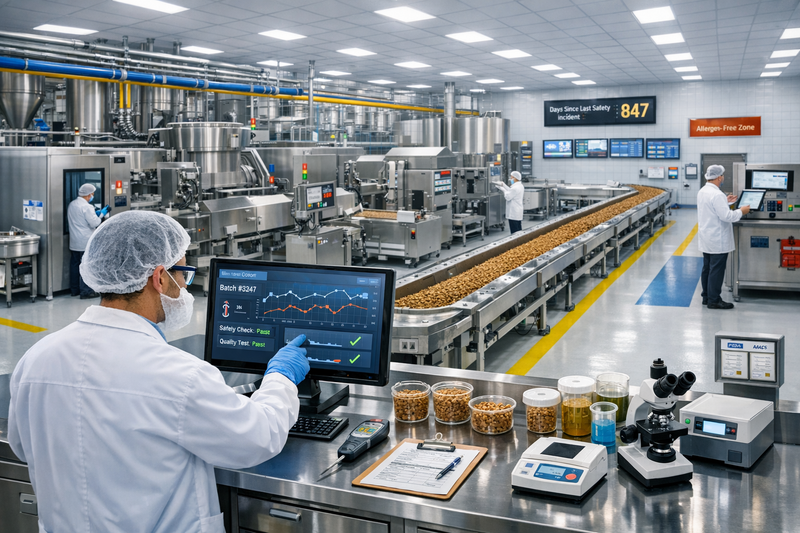
The pet food industry operates under the same rigorous food safety standards as human food manufacturing—and in many cases, faces even more complex regulatory oversight. As dog owners increasingly demand transparency and quality in what they feed their pets, manufacturers must implement robust compliance systems that protect animal health while satisfying stringent regulatory requirements.
The Regulatory Landscape for Dog Food Manufacturing
Dog food manufacturers navigate a complex web of regulations including FDA's Food Safety Modernization Act (FSMA), AAFCO standards, and state-specific requirements. Unlike human food facilities, pet food operations must demonstrate compliance with specific nutrient profiles, ingredient sourcing standards, and labeling regulations that address the unique nutritional needs of canine biology.
The FDA requires pet food facilities to follow Current Good Manufacturing Practices (cGMPs) and maintain detailed records of ingredient sourcing, processing parameters, and distribution chains. When contamination events occur—whether from Salmonella, Listeria, or nutritional imbalances—the impact extends beyond regulatory penalties to significant brand damage and potential harm to thousands of animals.
Critical Food Safety Points in Dog Food Production
Temperature Control and Pathogen Management
Raw materials used in dog food manufacturing, particularly meat proteins and bone meal, present elevated pathogen risks. Proper temperature monitoring throughout receiving, storage, and processing is non-negotiable. Cold storage areas must maintain consistent temperatures, with automated alerts when thresholds are breached.
Modern compliance management systems enable real-time temperature monitoring with mandatory acknowledgment protocols. When a freezer exceeds its safe temperature range, the system generates an alert that requires a specific user response—creating an auditable trail that demonstrates immediate corrective action rather than relying on post-shift paper logs that may not reflect real-time conditions.
Cross-Contamination Prevention
Dog food facilities often process multiple product lines—grain-free formulas, prescription diets, and traditional kibble—each with distinct ingredient profiles and allergen considerations. Cross-contamination between production runs can trigger recalls, especially when allergens or medications meant for one formula contaminate another.
Structured sanitation logs tied to specific production zones ensure cleaning protocols are executed and documented between changeovers. Location-based tracking allows operations teams to verify that equipment used for medicated feeds receives enhanced cleaning procedures before switching to standard formulas.
Ingredient Traceability and Supplier Verification
The 2007 melamine contamination crisis, which resulted in thousands of dog deaths, fundamentally changed ingredient oversight in pet food manufacturing. Today's operations must maintain complete traceability from ingredient suppliers through finished goods distribution.
Lot traceability systems enable manufacturers to answer critical questions within minutes: Which supplier provided the chicken meal in lot #45382? Which production runs used ingredients from that supplier? Which distributors received finished goods from those runs? This information, which once required hours of manual investigation across multiple spreadsheets and paper records, must now be immediately accessible.
Supplier verification programs require documentation of approved supplier lists, ingredient certificates of analysis, and periodic audits. When an ingredient supplier fails a quality check or receives a warning letter from regulators, manufacturers need rapid visibility into which lots are affected and where those products are in the distribution chain.
Documentation Requirements for Pet Food Audits
Sanitation and Pest Control Records
Pet food facilities face intense scrutiny regarding sanitation because many dog food ingredients are highly attractive to pests. Auditors expect to see detailed, timestamped sanitation logs for every production area, with user attribution showing which team members completed each cleaning task.
Pest control documentation must demonstrate regular monitoring schedules, trap placement maps, and immediate response protocols when activity is detected. Traditional paper-based systems create gaps—missed signatures, unclear timestamps, or illegible handwriting—that raise red flags during audits. Digital systems with mandatory field completion and automatic timestamping eliminate these vulnerabilities.
Employee Training and Certification
Workers handling raw ingredients, operating extrusion equipment, or managing packaging lines must complete role-specific training covering food safety principles, allergen awareness, and sanitation protocols. Training records must document not just initial completion but also recurring refresher courses and specialized certifications.
Automated training management tracks which employees have completed required modules, flags upcoming certification expirations, and generates alerts when training becomes overdue. During audits, this provides immediate proof of workforce competency rather than requiring HR staff to compile spreadsheets from multiple sources.
Incident Management and Corrective Actions
When quality issues arise—whether customer complaints about foreign material, internal detection of out-of-spec moisture content, or equipment malfunctions during production—the response process must be documented from initial report through resolution. This creates the corrective action record that demonstrates continuous improvement to auditors and regulators.
Structured incident workflows ensure investigations follow consistent protocols: What happened? What was the immediate response? What corrective actions were implemented? Who verified effectiveness? Severity-based escalation routes critical incidents involving potential safety hazards through accelerated review processes while less urgent quality issues follow standard timelines.
Linking incidents to specific lots, production runs, or equipment creates powerful analytics. If a particular extruder consistently generates texture complaints, that pattern emerges from the incident database—enabling preventive maintenance before a serious breakdown occurs.
Integrating Compliance into Daily Operations
The most effective food safety programs don't rely on separate compliance systems disconnected from production workflows. When plant floor staff must log into different platforms for production records versus sanitation logs versus temperature checks, compliance becomes a burden rather than an integrated practice.
Modern ERP systems designed for food manufacturers embed compliance functionality into the same platform managing production scheduling, inventory, and quality control. This means a production supervisor reviewing the day's schedule can immediately access sanitation status for each production line, verify that required equipment cleaning was completed, and confirm that all team members assigned to that shift have current food safety training.
Preparing for the Unexpected
Despite rigorous preventive controls, recalls and safety incidents can occur in any food manufacturing operation. When a potential safety issue is identified, response speed is critical—both for protecting dogs consuming the product and for demonstrating due diligence to regulators.
Complete lot traceability enables rapid identification of affected products. Rather than spending days reconstructing production records, manufacturers can immediately determine which finished goods lots contain ingredients from a questionable supplier batch. Distribution records show which customers received those lots, enabling targeted communication rather than costly broad recalls.
The documentation trail created through integrated compliance systems provides the evidence regulators require: temperature logs proving cold chain integrity, sanitation records demonstrating cleaning protocol adherence, and training records confirming that staff were qualified to perform their assigned tasks. This documentation doesn't guarantee immunity from regulatory action, but it demonstrates that the manufacturer operated with appropriate controls and responded appropriately when issues arose.
Building Consumer Trust Through Transparency
Dog owners researching pet food brands increasingly expect transparency about sourcing, manufacturing practices, and quality controls. While manufacturers can't share proprietary formulations, demonstrating commitment to food safety through certifications, audit results, and transparent recall communications builds brand loyalty.
Robust internal compliance systems create the foundation for these external communications. When a company can confidently state that every production lot undergoes rigorous testing, that claim is backed by searchable quality records. When marketing emphasizes stringent supplier verification, that promise is supported by documented supplier audit programs and ingredient COA tracking.
Conclusion
Food safety in dog food manufacturing requires the same systematic approach and documentation rigor as human food production—with additional complexity from unique nutritional requirements and ingredient sourcing challenges. As regulatory oversight intensifies and consumers demand greater transparency, manufacturers must implement compliance systems that integrate seamlessly with daily operations rather than functioning as disconnected administrative burdens.
The goal isn't simply passing audits—it's building operational systems that consistently produce safe, high-quality nutrition for the dogs that depend on it. When compliance documentation, temperature monitoring, sanitation tracking, and traceability function as integrated components of a unified system, food safety becomes embedded in organizational culture rather than existing as a separate compliance exercise.