What an ERP Morning Briefing Should Tell a Plant Manager at 6:00 AM
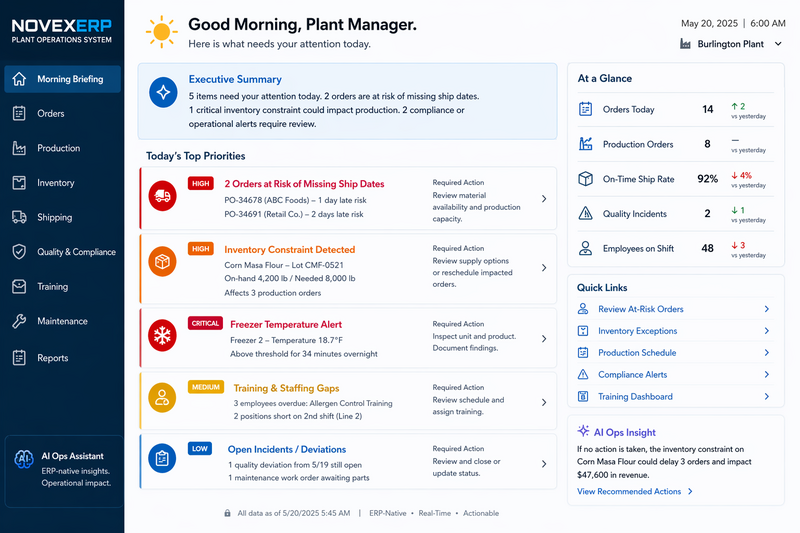
What an ERP Morning Briefing Should Tell a Plant Manager at 6:00 AM
Most daily reports are too long, too late, or too generic to be useful.
By the time plant leadership opens an email summary full of charts and yesterday's totals, the day has already started making demands. Orders are waiting. Inventory constraints are emerging. A freezer alert may have triggered overnight. Someone is overdue on training. A line issue from yesterday may still be unresolved.
A real morning briefing should not dump information. It should focus attention.
What Plant Managers Actually Need First
At the start of the day, leadership is not trying to read a full business intelligence deck. They are trying to answer a smaller and more important question: what needs intervention before normal work hides it?
A useful ERP morning briefing should surface the few items most likely to change the day if ignored.
- Orders at risk of missing ship dates.
- Inventory constraints that threaten planned production.
- Freezer or compliance alerts that need immediate review.
- Training or staffing gaps that affect readiness.
- Open incidents or deviations from yesterday that still matter today.
That is the level of signal the morning briefing should target.
Why ERP-Native Context Matters
The reason most daily reports feel weak is that they are assembled from disconnected systems. The dashboard exists in one tool. The order risk lives in another. Compliance alerts arrive by email. Inventory issues are found only after someone opens the detail screen.
An ERP-native briefing is different because it starts from the operational record itself. It can look across inventory, orders, production, shipping, compliance, and training without forcing a manager to gather the truth manually.
That means the briefing is not just informative. It is actionable. Each item can connect directly back to the workflow that needs review.
Where AI Actually Helps
AI is useful here for one reason: it can compress cross-functional complexity into a clear narrative without requiring a manager to scan five separate modules. Done well, it summarizes what changed, what is at risk, and where attention should go first.
Done badly, it produces generic observations no one acts on.
The standard should be high. A morning briefing should not sound like a chatbot. It should sound like an operations lead who reviewed the plant carefully and knows what matters today.
What Good Briefings Avoid
The best briefings are selective. They avoid flooding leaders with metrics that are technically true but operationally irrelevant at 6:00 AM.
They also avoid vague language. "Inventory should be monitored" is useless. "Two orders are at risk because one required raw material lot is below assignment threshold" is useful. Precision matters because the briefing is supposed to accelerate judgment, not replace it.
A Morning Briefing Should Change the Day
The real test is simple. If a plant manager reads the morning briefing and works differently because of it, the system is doing its job. If the briefing is merely informative, then it is still just a report.
Manufacturers should expect more. The ERP already knows the operational signals. The right morning briefing should turn those signals into priorities before the day gets noisy. That is where AI can actually earn its place in plant operations.