What Forecast-Aware Production Planning Looks Like in a Food Plant
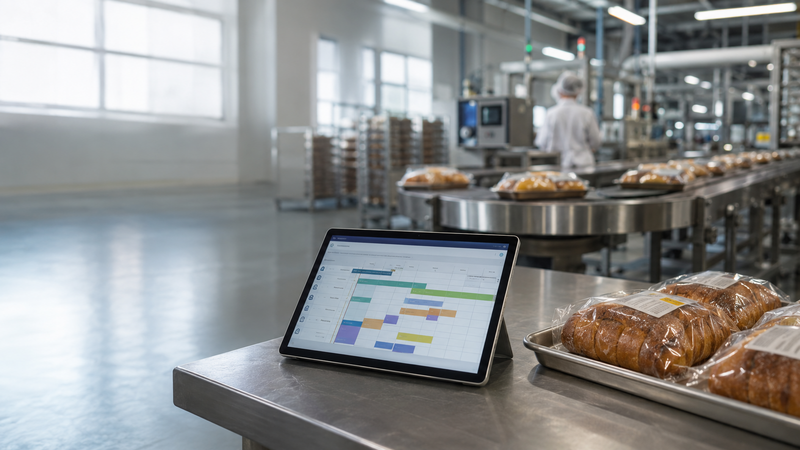
What Forecast-Aware Production Planning Looks Like in a Food Plant
Most production schedules are built from a mixture of experience, recent order volume, and urgency. That is understandable. It is also why many plants end up reacting to demand instead of planning against it.
Forecast-aware planning is not about replacing plant judgment with a model. It is about giving planners better context before they commit labor, raw material, and line time.
In food manufacturing, that context matters more because bad schedule decisions age quickly. Excess inventory expires. Too little inventory creates service failures. A plan that looked reasonable on Monday can become expensive by Thursday.
This is the gap NovexERP is built to close — bringing demand signals, inventory position, and the production calendar into the same workflow, so planners are deciding with the full picture rather than reconstructing it across systems.
Why Static Scheduling Fails
Static schedules often look fine on paper because they assume demand will behave. In reality, plants deal with short shelf life, customer variability, labor constraints, and supply uncertainty. Without demand context, the schedule becomes a guess with a calendar attached.
The symptoms are easy to recognize:
- High-volume items are underproduced while low-priority items build excess stock.
- Rush orders displace planned runs and create avoidable overtime, expedited freight, and changeover loss.
- Raw materials arrive on time but get consumed inefficiently because the plan shifted after they were already committed.
- Finished goods expire because the schedule solved for convenience or line balance instead of likely demand.
None of these problems are solved by more spreadsheets. They are planning problems, and they need planning context.
What Forecast-Aware Planning Should Add
A useful forecast does not have to predict the future perfectly. It has to improve the next decision.
For production planning, that means giving the plant a better basis for answering questions like:
- Which products are most likely to need replenishment soon?
- Where is current inventory already enough?
- Which planned runs create the most risk of overproduction or expiration?
- What demand changes should alter next week's schedule now, rather than after the fact?
When forecast data is connected to the production calendar, scheduling becomes less reactive. Planners can see demand pressure and inventory posture together instead of juggling them separately.
NovexERP brings these views into a single planning workflow. Forecast, current inventory by lot and shelf life, open orders, and the production schedule are visible side by side — so a planner can see not just what to make next, but why, and what the next decision will look like once that run is committed.
Why Food Plants Need Context, Not Just Reports
Many organizations already have demand reports. That is not the same as forecast-aware scheduling. A report tells you what happened or what may happen. A connected planning workflow shows how that information should influence line decisions today.
This is where operational software matters. If the forecast lives in one place and the schedule lives in another, the plant still relies on manual interpretation to bridge the gap. That slows decisions and weakens accountability, because the rationale behind the schedule is never fully captured.
NovexERP closes that bridge inside the system the plant already uses to run production. Planners do not export a forecast, reconcile it against an inventory snapshot, and then update a schedule somewhere else. The signals and the schedule live together, and the changes leave a trail.
The Best Planning Systems Also Reveal Risk
A good planning process does not just suggest what to produce. It also highlights what is risky.
Maybe a product is trending down and another full run would create inventory that is hard to move before code date. Maybe customer demand is rising, but raw material constraints make service risk more likely. Maybe one planned item looks safe on volume until you factor in remaining shelf life on what is already in the warehouse.
Forecast-aware planning helps surface those tradeoffs before production starts, when they are still manageable. NovexERP highlights this kind of risk in line with the schedule itself — flagging runs where shelf life, inventory position, or demand trend point toward likely waste, shortage, or service failure — so planners are reacting to risk on the screen, not after a customer call.
Planning Should Be Defensible
One of the most underrated benefits of connected forecasting is that it makes scheduling decisions easier to explain. Instead of "this is what we usually do," planners can point to inventory position, expected demand, and production timing together.
That creates a stronger operational culture. Plans become decisions with reasoning, not just habits with a date on them. And when the reasoning is captured in the system, it carries forward — through shift changes, planner turnover, and the inevitable post-mortem when something does go wrong.
If your current scheduling process still depends mainly on memory and urgency, there is an obvious improvement available. Bring forecast context into the same system where production planning actually happens. That is the principle NovexERP is built around. It will not remove judgment from the plant. It will make that judgment better informed, and it will make the resulting plan something the whole organization can see, trust, and defend.